Mostrando entradas con la etiqueta The Earth. Mostrar todas las entradas

jueves, 13 de marzo de 2014

Evaluation Mind Maps About The Earth

With this post you are going to evaluate your partner's videos and popplets following the rubric and answering to this questionaire.


When you finish reading the rubric and you have everything clear in your mind, you can start watching your partners video and answering the questions to evaluate it. IT IS VERY IMPORTANT TO HAVE CLEAR WHAT YOU HAVE TO LOOK FOR AND WHAT ARE THE CRITERIA FOR EVALUATION.


You will send your evaluation through this Google Form. DON'T FORGET TO CLICK ON SUBMIT AT THE END.


To write the comments, you have to follow this pattern:
  • REDACCIÓN EN KIDBLOG: Tienes … porque…
  • ORGANIZACIÓN EN EL MIND MAP: Tienes … porque…
  • ESTRUCTURA DEL TEXTO: Tienes … porque…
  • ORTOGRAFÍA: Tienes … porque…
  • TÉCNICA GRAMATICAL Y TIEMPOS VERBALES: Tienes … porque…
  • VOZ Y RITMO: Tienes … porque…


Mind Maps about The Earth (Science Year 5 - Unit 7)

Utilizando las TICs para repasar, una vez terminada la unidad sobre LA TIERRA, la Atmósfera, la Hidrosfera,  la Geosfera,  Volcanes, terremotos y la acción climatológica,   trabajamos como siempre, realizamos nuestro mapa conceptual con Popplet.


Después los alumnos graban su explicación con la aplicación Screencast-O-Matic. 


Publican su entrada en su Portfolio Personal creado dentro de los blogs personales de Kidblog.


Y nos lo envían para poder corregirlo a través de la red social educativa de Edmodo.
Estos son los trabajos de los alumnos de esta unidad. 

Jon's Mind Maps

jueves, 6 de marzo de 2014

Volcanoes, Earthquakes and Weathering

We are going to finish with this unit 7. First we have learnt about  THE ATMOSPHERE. Second we have discovered THE HYDROSPHERE.  Third we have learnt about THE GEOSPHERE.
Finally we are going to learn about VOLCANOES, EARTHQUAKES and WEATHERING.

VOLCANOES

How many times do you see when a volcano erupts?


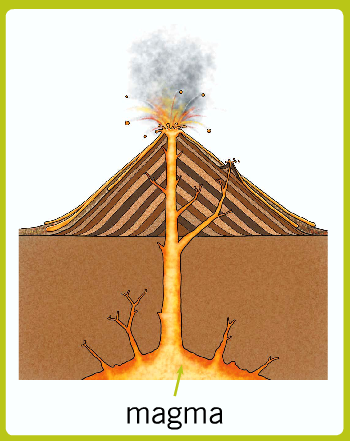
Volcanoes form in places where there is magma, red-hot liquid rock, just under the surface.


The parts of a VOLCANO


Where does the magma go?


What is a circular opening which the magma emerges through it called?

What does it emerge through thre crater?


Layers of lava and ash cool and solidify around the crater, and form a VOLCANIC CONE.


If you want  to get to know more about VOLCANOES, you could look at this webpage:

EARTHQUAKES

Could you tell us what the earthquakes are caused by?


EARTHQUAKES are caused by the movements of the Earth's crust.

WEATHERING


What is the action of wind and water called?


When we will have finished to watch the video, we are going to test yourself:


EROSION is the removal of soil and rocks by wind and water.


TRANSPORT is the movement of eroded material.


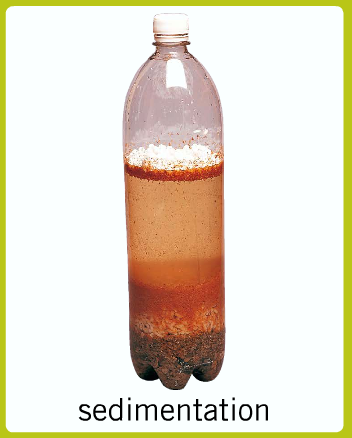
SEDIMENTATION is the accumulation of eroded material from other places.

To review everything we are going to make these activities:

miércoles, 5 de marzo de 2014

The Geosphere

We have been learning about THE ATMOSPHERE and THE HYDROSPHERE. Even though today it is time to learn about THE GEOSPHERE.


What is the geosphere?

The geosphere is made up of three layers.

GEOSPHERE LAYERS

Could you join the picture with the correct answer to these questions?

 Which is the outer layer of the geosphere?
Which is the inner layer?
Which layer is between the crust and the core?


ROCKS and MINERALS


Are rocks natural materials?
Are minerals natural materials?
What are rocks made of?

To get to know more than rocks, we are going to watch this webpage:


TYPES OF ROCKS

Rocks can be classified into three types depending on how they are formed:


To remember everything about the Geosphere, we are going to do these activities:

jueves, 27 de febrero de 2014

The Hydrosphere

In the topic of the Earth, also we are going to learn about THE HYDROSPHERE.


What is the hydrosphere?


The hydrosphere is all the water on Earth.

I would like to know how and where I can find water. Can you tell me?


WATER

LIQUID (covers most of the Earth's surface) is found in oceans, seas, rivers and lakes.
SOLID (snow and ice) is found in the polar regions and on mountains.
GAS (water vapor) is found in the atmosphere.

To get to know more about the hydrosphere, we will visit this webpage:

THE WATER CYCLE

Can you explain how the water cycle works? 

To answer this question, first of all we are going to watch this webpage. We will watch a video and test yourself.


Explain the picture which is below in pairs. (You can use the book page 28)


THE MOVEMENT OF WATER


Are you able to match the definition with the correct movement of water?


  • (...) are the rise and fall of the water's surface. They are caused by wind.
  • (...) are the rise and fall of the sea level twice a day. They are caused by the gravitational pull of the Moon and Sun.
  • (...) are the movements of large masses of ocean water in the same direction.

To remember we are going to make these activities:

miércoles, 26 de febrero de 2014

The Atmosphere

The gist of this topic is THE ATMOSPHERE.
What is the atmosphere?


The atmosphere is the air which surrounds the Earth.

To get to know more about the atmosphere, we will visit this webpage:

How many types of gases are there in the atmosphere?


THE LAYERS OF THE ATMOSPHERE


 It is the lowest layer. Plants and animals live here.


It is the next layer.


It is a thin layer of ozone in the upper stratosphere.


There is no atmosphere in this layer.

WEATHER PHENOMENA


It is water, such as rain, snow or hail, which falls from the atmosphere to the Earth.

It is the movement of air, and has different names depending on how strongly it blows.

To remember we are going to make this activity: