Mostrando entradas con la etiqueta History. Mostrar todas las entradas

viernes, 13 de junio de 2014

SPAIN AFTER 1492

We have walked along the medieval time in our country with the VISIGOTHS, AL ANDALUS and THE CHRISTIAN KINGDOMS. We are going to review a bit all of it with a new THINKING ROUTINE: THE HOT WORDS.  What is a HOT WORD? It is a word that can help you to remember lot of things about a topic. So let's think during a minute about three hot words about each one of the topics we have learnt during this unit. 

Now let's watch a video to introduce what happened in Spain after 1492: THE SPANISH EMPIRE. At the end of the video you should be able to answer these questions: 
  • Which was one of the conquerors?
  • Which continent was the biggest part of the Spanish Empire in?
  • Which metal was important during this period?


SPAIN AFTER 1492


Columbus reached America in 1492.

In this year also the Catholic Monarchs unified the kingdoms of Spain. 

Charles I and Philip II acquired new possesion during the 16th century.


In 18th Century the kings stablished ABSOLUTE MONARCHY. 

THE TERRITORIES OF THE SPANISH EMPIRE. 


Between 16th and 19th century Spain has possesions in every part of the world: Canary Islands, America, Philippes in Asia and several teritorritories in Norh Africa. The kings also inherited territores in central an southern Europe.
By the end of 19th century most of these possessions no longer belonged to Spain.

WRITERS AND ARTISTS
In the 16th and 17th  centuries was a great century for art and literature in Spain: THE GOLDEN AGE.

Literature: Miguel de Cervantes wrote El quijote. Famous poets like Quevedo and Góngora. Lope de Vega and Calderón de la Barca wrote many plays. 

Paintings: Diego Velazquez was one of the famous painters of this time. 

jueves, 12 de junio de 2014

THE CHRISTIAN KINGDOMS

We have been talking about: VISIGOTHS and about AL ANDALUS.  We are going to review how are you learning with a THINKING ROUTINE: THE TRAFFIC LIGHTS. Just to remind you:

  • GREEN: what you have already learnt.
  • ORANGE: what you are trying to improve or going deeper.
  • RED: what you haven't learn at all. 

Let's have a look about a famous Spanish TV serie, at the end of the video you will answer some questions:
  • Who were the kings when they got Granada?
  • Were there any kind of war or battle?


THE CHRISTIAN RECONQUEST

Around year 1000 Al Andalus weakened and broke up into TAIFA.


Christian Kingdoms expanded.

The Christian Reconques was completed in 1492, when the Caholic Monarchs conquered Granada. 


THE CHRISTIAN KINGDOMS
Around 1230 the Christian Territory was divided into:

  • The Kingdom of Navarre included Navarre and part of la Rioja.
  • The Crown of Aragon included the Kingdom of Aragon, Valencia and Majorca with the Catalonian Counties.
  • The Crown of Castile included the Kingdom of Castile and the Kingdom of Leon. Later will include Andalusia.
  • Portugal was an independent kingdom.

In 1479 Isabella I of Castile and Ferdinand II of Aragon, married and united the Crown of Aragon and Castile. They were known as Catholic Monarchs.

THE KINGDOM OF GRANADA.

It was the last Taifa Kingdom 
(Granada, Malaga and Almeria)

It was weakened by internal disputes. Finally it was conquered by the Catholic Monarchs. 


miércoles, 11 de junio de 2014

Al-Andalus.

Today we are going to work with a new THINKING ROUTINE. It is called THE MISTERY QUESTION. You have to think on what we learnt the last lesson: THE MIDDLE AGES. Once you have in mind you have to create a question that maybe one of your partners could not understand. The teacher will try to answer and explain better that points.

Once we have solved all the questions and everything is clear we are going to watch a video to learn a bit more about AL-ANDALUS. Pay attention because at the end of the video you have to answer the following question:
  • Where did the first Muslim enter through to start the conquest of Spain?


MUSLIMS AND CHRISTIANS. 

In 711A.D. Muslims from northern Africa invaded Visigothic Spain. 

Hispania was called Al-Andalus.

Muslims brought their customs, laws and religion. 

The highest authority was the CALIPH and the religion was ISLAM

They lived in cities. They were merchants and craftsmen.

Christians live in the country in the north of Península, the highest authority was the KING. They were farmers. 

AL ANDALUS
The peninsula was occupied by Muslims for almost eight hundred years.

They lived in walled cities on hills. 

They built palaces and Mosques.


They most important city was Córdoba the capital.

THE CHRISTIAN KINGDOMS.


Muslims occupied the south, but there were indepedent Christian Kingdoms in the pas in the north like: Kingdom of Asturias, later the kingdom of Leon. 

At the end of the period the KINGDOm OF CASTILE was formed. 

LET'S PLAY AND CONTINUE LEARNING. 

lunes, 10 de junio de 2013

Revision videos about SPAIN AFTER 1492

With this post you are going to evaluate your partner's videos and popplets following the rubric and answering to this questionaire.


When you finish reading the rubric and you have everything clear about your mind, you can start watching your partners video and answering the questions to evaluate it. IT IS VERY IMPORTANT TO HAVE CLEAR WHAT YOU HAVE TO LOOK FOR AND WHAT ARE THE CRITERIA FOR EVALUATION.


You will send your evaluation through this Google Form. DON'T FORGET TO CLICK ON SUBMIT AT THE END.

domingo, 9 de junio de 2013

Popplets about SPAIN AFTER 1492

Utilizando las TICs para repasar, una vez terminada la unidad sobre la EDAD MEDIA, el Imperio Español, esplendor cultural y declive político, la España de los Borbones, el siglo XIX español, trabajamos como siempre, realizamos nuestro mapa conceptual con Popplet.


Después los alumnos graban su explicación con la aplicación Screencast-O-Matic. 


Publican su entrada en su Portfolio Personal creado dentro de los blogs personales de Kidblog.


Y nos lo envían para poder corregirlo a traves de la red social educativa de Edmodo.
Estos son los trabajos de los alumnos de esta unidad. 

viernes, 31 de mayo de 2013

A HISTORY MAGAZINE.

You are going to become a history journalist!!!


After a term full of history lessons. We are going to investigate about the history of our area.  And publish an article and create a  History Magazine in the class.

The article will have five parts:
  • Title (It should be atractive, not just the name of the Historical period)
  • Historical context of the period, some short information talking about history.
  • Documentary about this period. (It should be an storytelling about daily life in this historical period)
  • Brief summary about what happened in our area (Aguilar de Campoo)
  • The authors and from which websites or books you took the information (the bibliography).
As we have done in all the tasks it is very important to follow the process and the following steps:

1. We will divide the class into 9 groups (most of them will be pairs and some will be threes)
      • Prehistory. 
      • Preroman times.
      • Roman Times
      • Visigothics.
      • Muslims.
      • Christian Kingdoms.
      • Catholic Monarchs and XVI century.
      • XVIII Century.
      • XIX Century.
2. Let's review all the history posts to look for information about your history period. 

3. Write a short summary for the HISTORICAL CONTEXT  with the most important facts.

4. CREATE a documentary or "storytelling" about life in the historical period:
5. With the following links INVESTIGATE and WRITE a paragraph about this historical period in our area of Aguilar de Campoo. 
6. You will create your article for the Magazine. We are going to use a new app to  create it:


This video will help you to know how to deal with it: 
(It was done by @jferna35)


Your teacher will say to you what page of the magazine you have to do and also the username and the password to enter in your class magazine.

7. Each member of the group will write a post in the kidblog as it was a page of the magazine. And send it to the teacher through the EDMODO. 

8. EVALUATION:
  • We are going to have 100 points.
  • 50 points will be used by the teachers. (Using the rubric)
  • 28 will be used by self-evaluation. (Using the rubric, it is individually)
  • 22 will be used by the teamwork. (Give out maximum 22 points to each member of the group)

  • You are going to create a paper as draft. You have to include:
    • Your name and members of your group.
    • Your self-evaluation with the rubric. (Maximum 28 points)
    • Your teamwork's points. (Maximun 22 points)

    HERE YOU HAVE THE RUBRIC

martes, 21 de mayo de 2013

The 19th Century of Spain.

In this video you will know a bit more about one of the most important characters during this century: FERDINAND VII.


THE SPANISH WAR OF INDEPENDENCE.
  • In 1808:
    • Napoleón Bonaparte, the Emperor of France, invaded Spain.
    • The King Ferdinand VII was forced to abdicate.
    • Napoleon's brother, Joseph Bonaparte, became king. 
    • Opposition to his reign led to the Spanish War of Independence.
  • The Spanish parliament, or Cortes, took refuge in Cadiz. In 1812 they wrote the first modern Constitution, the Constitution of Cadiz (La Pepa).
      • It limited the king's power.
      • It stablished the right of citizens, including the vote for 25 year-old men. 
THE RESTORATION OF FERDINAND VII:

  • In 1814 Ferdinand VII was restored as King. Initially, he did not accept the Constitution and he ruled in an authoritarian manner.
  • In 1820 Ferdinand VII was forced to accept the Constitution after the revolt. Three years later he was restored as an absolute monarch with the help of the French. 
  • The political chaos in Spain caused an independence movement in the Spanish colonies in Spain.
    • In 1824 all the American colonies except Cuba and Puerto Rico were independent. 
CONSERVATISM AND LIBERALISM:


In 1833, Ferdinand's daughter, Isabella II, came to the throne. During her reign there were conflicts between two groups:
  • Conservatives, they had traditional values, and supported an absolute monarchy. 
  • Liberals, they wanted reforms to modernise the country. They supported the Constitutions, and favoured limitations on the powers of the monarch. 
There were many coups d'etat by army officers and in 1868 Isabella was exiled. 

In 1873, the First Spanish Republic was proclaimed, but it lasted less than a year. In 1874, the monarchy was restored under Isabella's son, Alfonso XII. 

LET'S PLAY WITH THIS ACTIVITIES AND REVIEW THE LESSON. 


lunes, 20 de mayo de 2013

Bourbon Spain

This short video will explain to you how it was started a new period in the history of Spain:


THE SPANISH WAR OF SUCCESSION:

  • Charles II, died in 1700, without descendants.
  • Two Royal families claimed for the Spanish Throne: The French Bourbons and The Austrian Habsburgs.

As you can see in the map most of the European countries were involved in this long war, The Spanish War of Succession it lasted from the 1701 to the 1714.
Whe it ended Philip V, the French claimant, became the King of Spain. The Bourbon dinasty started and replaced the Habsburgs.

THE BOURBON DINASTY:


  • Philip V established the absolute monarchy. In which the monarch has all the power of the country. 

  • Other Bourbon Kings were: Charles III and Charles IV. They introduce many reforms.
  • Secretaries of states were appointed to help the king with different issues such the tax collection, the administration of American territories.
  • To improve the economy they created small royal factories. 

SCIENCE AND CULTURE IN THE 18TH CENTURY:
 Science and Culture were very prominent during the 18th Century:
  • Academies were founded, such the Royal Academy of Language.
  • Daily newspapers appeared.
  • Many museums and botanical gardens were created. 


LET'S CHECK ALL WHAT YOU HAVE JUST LEARNT ABOUT BOURBONS WITH THIS ACTIVITY. 

ENJOY & LEARN

jueves, 16 de mayo de 2013

Culture splendour and political decline.

In this video you will see one of the most important Spanish books around the world, this book was written during the Golden Age:


The Spanish Golden Age was a period of great artistic activity which lasted from about 1560 to 1680:


  • ARCHITECTURE: 
    • The Monastery of El Escorial was built in a simple, austere style in the 16th century.
    • The Baroque style of rich ornamentation developed in the 17th century. A good example is the Cathedral of Seville.
  • LITERATURE:
    • Miguel de Cervantes wrote Don Quixote, one of the greatest books.
    • Lope de Vega who wrote plays and poetry.
    • Luis Góngora who wrote poetry.
  • PAINTING: 
    • In the 16th Century, El Greco became famous for his characteristic of elongated figures. 
    • In the 17th century, Diego Velázquez painted his masterpieces.

THE 17th CENTURY CRISIS:
Three Habsburg kings reigned in the 17th century.
  • Philip III (1598-1621)

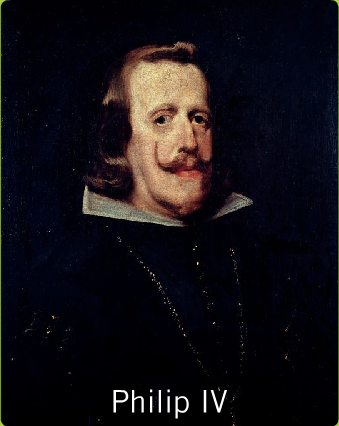
  • Philip IV (1621-1665)

  • Charles II (1665-1700):
  • They had ministers to help them to govern. Some of these ministers became extremely powerful.
  • The 17th century was a period of political and military decline. 
  • After lots of years of revolts they lost the Netherlands. 
  • There were revolts in Catalonia and Portugal. At the end they lost Portugal. 
  • Economy was stagnant and people were very hungry. 

miércoles, 15 de mayo de 2013

The Spanish Empire

This is a map how was Spain and the Spanish Empire after 1492 and then answer the questions:

  • Who had the largest empire, Charles I or Philip II?
  • Name some of the territories in the empires.
  • Which territories were part of the empires of both kings?

With this video you will understand what happened along this period of History.


THE REIGN OF THE CATHOLIC MONARCHS.

 
  • The Catholic Monarch unified Spain geographically, and expanded its territories. 
  • They conquered the Kingdom of Granada, the Canary Islands and some territories in North Africa. 
  • They financed Christopher Columbus expedition, which led to the discovery of America. 

THE SPANISH EMPIRE.


  • Charles I, Isabella's grandson, became king of Spain in 1516. 
  • He ruled a big empire, which included:
      • The Catholic Monarchs' territories.
      • The Netherlands.
      • Other lands in Centra Europe. 
  • He faced serious problems during his reign:
      • Revolts in Spain.
      • Wars in Europe (for political, social and religious reasons).

  • Philip II, Charles I's heir, became king in 1556.
  • His enormous empire included:
      • The Iberian Peninsula.
      • The Netherlands.
      • Territories in southern Italy.
      • America.
      • Asia.
      • Africa.
  • He was involved in many wars:
      • Against France in 1557.
      • Against the Turks at the Batalla de Lepanto in 1571.
      • Netherlands started a long rebellion.
  • The wars were expensive so prices increased a lot and people became poorer. 
  • In adittion, less gold and siver was sent from America. 
LET'S DO THIS ACTIVITY TO REVIEW WHAT YOU HAVE LEARNT ABOUT THE GREAT SPANISH EMPIRE. 

miércoles, 8 de mayo de 2013

Revisión of your videos about MIDDLE AGES

With this post you are going to evaluate your partner's videos and popplets following the rubric and answering to this questionaire.


When you finish reading the rubric and you have everything clear about your mind, you can start watching your partners video and answering the questions to evaluate it. IT IS VERY IMPORTANT TO HAVE CLEAR WHAT YOU HAVE TO LOOK FOR AND WHAT ARE THE CRITERIA FOR EVALUATION.


You will send your evaluation through this Google Form. DON'T FORGET TO CLICK ON SUBMIT AT THE END.