Mostrando entradas con la etiqueta plants. Mostrar todas las entradas

viernes, 10 de febrero de 2017

Plant life at Montaña Palentina - Final Task Science

Desde el DECRETO 26/2016 de 21 de julio.


CONTENIDOS.
Las  plantas: Características, reconocimiento y clasificación. 
La estructura y fisiología de las plantas.  
La fotosíntesis y su importancia para la vida en la Tierra.


CRITERIOS DE EVALUACIÓN:

3. Conocer la clasificación de las plantas, atendiendo a sus características y tipos e identificar la importancia de la fotosíntesis para los seres vivos.


ESTÁNDARES DE APRENDIZAJE.
3.1. Observa directa e indirectamente, identifica características y clasifica plantas.
3.2. Explica la importancia de la fotosíntesis para la vida en la Tierra.

ENFOQUE COMPETENCIAL:

Competencia en Comunicación Lingüística:

  • El alumno será capaz de:
    • Buscar, recopilar y procesar y comunicar información.
    • Utilizar los códigos de comunicación para conversar solicitando información.
Conciencia y expresión cultural:
  • El alumno será capaz de:
    • Considerar la flora como parte del patrimonio cultural de los pueblos de la montaña palentina. 
Sentido de iniciativa y espíritu emprendedor:
  • El alumno será capaz de:
    • Tomar decisiones y elegir teniendo criterio propio
Competencias sociales y cívicas:
  • El alumnos será capaz de:
    • Manejar habilidades sociales y saber resolver los conflictos de forma constructiva.
Aprender a aprender:
  • El alumnos será capaz de:
    • Aplicar los nuevos conocimientos y capacidades en situaciones parecidas y contextos diversos.
    • Ser capaz de trabajar de forma cooperativa y mediante proyectos
Competencia Matemática y Competencias básicas en ciencia y tecnología:
  • El alumno será capaz de:
    • Conservar los recursos y aprender a identificar y valorar la diversidad natural
    • Expresar e interpretar con claridad y precisión informaciones, datos y argumentaciones.
Competencia Digital:
  • El alumno será capaz de:
    • Buscar, seleccionar, registrar, tratar y analizar la información.
    • Trabajar en entornos colaborativos
    • Generar producciones responsables y creativas.
    • Utilizar las tecnologías de la información y la comunicación como instrumento de trabajo intelectual (función transmisora y generadora de información y conocimientos.)

AIM OF THE TASK

Create a SWAY presentation about the plant life of Montaña Palentina and a video to explain the photosynthesis.


PROCESS:

We strongly suggest to you the following steps in order for your group to success:


STEP 1: Distribute the roles in your group. Make sure everybody has understood their role and the aim of this task.

STEP 2: Open the Learning Diary for this task. IMPORTANT: It is a new document, only about this task and the same of the whole task. Let's share it with your mates and your teacher. And remember you have to complete everyday. 
LEARNING DIARY "Plant life at Montaña Palentina"


STEP 3: Let's try to activate all your learning about the topic. For that purpose we are going to use a COOPERATIVE LEARNING TECHNIQUE: What I know.... / what we know......
+


STEP 4: Start making the SWAY. Remember everybody should have access to it and everybody has to do at least one of the plants (If you are a group with three members you only have to do three). You can duplicate the example we offer to you below this paragraph. 


STEP 5: Divide the SWAY work, each member of the groups has to talk about one plant in the SWAY. The following websites will help you to look for the information.
If you need to look for more information on the net please let use the Scientific Name of the plant, not all the plants are called by the same name in all the places. 


STEP 6: Now it is time to tell everybody what your groups has learnt about the Photosynthesis and plant nutrition. And you are going to do it in a creative way with a video. Here you have some examples you can use (of course they are not about the topic but they are just to inspiring you on a good idea).

Let's prepare a Storyboard. It is a paper in which you are going to summarize all the scenes of the video. It is a draft, don't do it quick but also don't look for the perfection on pictures. Use the information which is explained at pages 42 and 43 from your Class Book.

Everybody has to take place on it so the COOPERTIVE LEARNING TECHNIQUE: Let's spin the sheet can help you.

You can use this graphic organizer as an example. 

STEP 7:  Time to write the script. Remember that you need to know what to say or do at each moment in the video. You could use the following sentences in the video:

    • Hello, we are ...........................................
    • We are going to explain you ..............................
    • For the Photosynthesis the plant needs..........................
    • Explain the process: 
      • The plant takes........................ through the ......................
      • From the roots the ................................. goes to the leaves through the ........................
      • At the leaves is prepared the ....................... and it goes to the rest of the plant though................
      • With the photosynthesis the plant produces............................
Let's check your teacher your script, divide what each person will say, and prepare all the materials, pictures, posters, characters or customs you will need to use. 

STEP 8: Record the video, remember you will need a camera, a tablet or a mobile phone (if you choose remember SIM cards are not allowed). It is important you know how to work with it and how you take out the videos. 

    When you finish you have to upload your video to Vimeo. It is not needed that all the member upload it, one is enough.
    • Title: Photosynthesis (names of the students)
    • Description: This is the video we have created for........
    • Tags: colsangregorio, redxxi, Year 5, Science, Plants.
STEP 9: Include your video into your SWAY, using the EMBED CODE, you will find it in Compartir -------- Insertar.  

STEP 10: This is going to be the personal part each one should create on they own portfolio. Each member of the group has to create a post with the following information.
    • Title: Plants
    • Introduction: I'm ........................... This is the final product of my group. Along this task we ..................... and I ........................................
    • EMBED THE SWAY. 
    • Learning Diary: (Please try to think on it and write more than a word)
      • What have I learnt with this task?
      • Did I have to go back on something?
      • How did I learn along this task?
      • What do I want to learn more about?
    • Remember to write the tags:
      • Colsangregorio
      • Redxxi
      • Year 5
      • Natural Science
      • Plants 
    This example done by the teachers can help you. POST PLANTS


    STEP 11: Sent to your teacher through Microsoft Classroom. 


miércoles, 27 de enero de 2016

What kind of plant can you find at Montaña Palentina? (Final Task - Plants - Year 5)

Desde la orden EDU/519/2014 de 17 de junio.

CONTENIDOS.

 Las  plantas:  Características, reconocimiento y clasificación. La estructura y  fisiología  de  las  plantas.  La  fotosíntesis  y  su  importancia para la vida en la Tierra.

CRITERIOS DE EVALUACIÓN:

3. Conocer  la  clasificación  de  las  plantas, atendiendo a sus características y tipos e identificar la importancia de la fotosíntesis para los seres vivos.

ESTÁNDARES DE APRENDIZAJE.

3.1.  Observa  directa  e  indirectamente, identifica  características  y  clasifica  plantas.
3.2.  Explica  la  importancia  de  la  fotosíntesis para la vida en la Tierra

ENFOQUE COMPETENCIAL:


Competencia en Comunicación Lingüística:

  • El alumno será capaz de:
    • Buscar, recopilar y procesar  y comunicar información.
    • Utilizar los códigos de comunicación para conversar solicitando información.
Conciencia y expresión cultural:
  • El alumno será capaz de:
    • Considerar la flora como parte del patrimonio cultural de los pueblos de la montaña palentina. 
Sentido de iniciativa y espíritu emprendedor:
  • El alumno será capaz de:
    • Tomar decisiones y elegir teniendo criterio propio
Competencias sociales y cívicas:
  • El alumnos será capaz de:
    • Manejar habilidades sociales y saber resolver los conflictos de forma constructiva.
Aprender a aprender:
  • El alumnos será capaz de:
    • Aplicar los nuevos conocimientos y capacidades en situaciones parecidas y contextos diversos.
    • Ser capaz de trabajar de forma cooperativa y mediante proyectos
Competencia Matemática y Competencias básicas en ciencia y tecnología:
  • El alumno será capaz de:
    • Conservar los recursos y aprender a identificar y valorar la diversidad natural
    • Expresar e interpretar con claridad y precisión informaciones, datos y argumentaciones.
Competencia Digital:
  • El alumno será capaz de:
    • Buscar, seleccionar, registrar , tratar y analizar la información.
    • Trabajar en entornos colaborativos
    • Generar producciones responsables y creativas.
    • Utilizar las tecnologías de la información y la comunicación como instrumento de trabajo intelectual (función trAansmisora y generadora de información y conocimientos.)
AIM OF THE TASK
Create a presentation about the plant life of Montaña Palentina and a video to explain the photosynthesis.


PROCESS

STEP 1: You are going to work in your cooperative groups. Remember you have different roles, let's check it into the following presentation and divide it. Let's open a Google Drive document for your Working diary:
  • Date.
  • Roles.
  • Aim of the day.
  • What have you done?
  • Problems.


STEP 2:  Start the presentation, every member of the group should have access to it. It must have:
  • Slide 1: Title and authors.
  • Slide 2: 1st plant.
  • Slide 3: 2nd plant.
  • Slide 4: 3rd plant.
  • Slide 5 4th plant.
  • Slide 6: Video about photosynthesis.
Here is an example of it.


STEP 3: Divide the presentation work, each member of the groups has to talk about one plant in the presentation, so it should do one of the first fourth slides. The following websites will help you to look for the information.
If you need to look for more information on the net please let use the Scientific Name of the plant, not all the plants are called by the same name in all the places. 

STEP 4: Now it is time to tell everybody what your groups has learnt about the Photosynthesis and plant nutrition. And you are going to do it in a creative way with a video. Here you have some examples you can use (of course they are not about the topic but they are just to inspiring you on a good idea).

Let's prepare a Storyboard. It is a paper in which you are going to summarize all the scenes of the video. It is a draft, don't do it quick but also don't look for the perfection on pictures. Use the information which is explained at pages 42 and 43 from your Class Book.

Everybody has to take place on it so the COOPERTIVE LEARNING TECHNIQUE: Let's spin the sheet can help you.

You can use this graphic organizer as an example. 


STEP 5:  Time to write the script. Remember that you need to know what to say or do at each moment in the video. You could use the following sentences in the video:
  • Hello, we are ...........................................
  • We are going to explain you ..............................
  • For the Photosynthesis the plant needs..........................
  • Explain the process: The plant takes........................ through the .......................
  • From the roots the ................................. goes to the leaves through the ........................
  • At the leaves is prepared the ....................... and it goes to the rest of the plant though................
  • With the photosynthesis the plant produces............................
Let's check your teacher your script, divide what each person will say, and prepare all the materials, pictures, posters, characters or customs you will need to use. 

STEP 6: Record the video, remember you will need a camera, a tablet or a mobile phone (if you choose remember SIM cards are not allowed). It is important you know how to work with it and how you take out the videos. 

When you finish you have to upload your video to Youtube. It is not needed that all the member upload it, one is enough.
  • Title: Photosynthesis (names of the students)
  • Description: This is the video we have created for........
  • Tags: colsangregorio, redxxi, Year 5, Science, Plants.
STEP 7: Include your video into your Google SlideShow Presentation. 

STEP 8: This is going to be the personal part each one should create on they own portfolio. Each member of the group has to create a post with the following information.
  • Title: Plants
  • Introduction: I'm ........................... This is the final product of my group. Along this task we ..................... and I ........................................
  • Embed the presentation.
  • Learning Diary: (Please try to think on it and write more than a word)
    • What have I learnt with this task?
    • Did I have to go back on something?
    • How did I learn along this task?
    • What do I want to learn more about?
  • Remember to write the task (colsangregorio, redxxi, Year 5, Science, Plants.)
This example done by the teachers can help you. POST PLANTS


ASSESMENT
Teacher's assesment (60% of the final mark) Maximum 28 points

Self-assesment (20% of the final mark) Maximum 28 points


Peer evaluation (20% of the final mark) Maximum 28 points

martes, 13 de enero de 2015

Mind Maps about Plants (Peer Evaluation Time- Science Unit 2)

With this post you are going to evaluate your partner's videos and popplets following the rubric and answering to this questionaire.


When you finish reading the rubric and you have everything clear about your mind, you can start watching your partners video and answering the questions to evaluate it. IT IS VERY IMPORTANT TO HAVE CLEAR WHAT YOU HAVE TO LOOK FOR AND WHAT ARE THE CRITERIA FOR EVALUATION.


You will send your evaluation through this Google Form. DON'T FORGET TO CLICK ON SUBMIT AT THE END.


To write the comments, you have to follow this pattern:
  • REDACCIÓN EN KIDBLOG: Tienes … porque…
  • ORGANIZACIÓN EN EL MIND MAP: Tienes … porque…
  • ESTRUCTURA DEL TEXTO: Tienes … porque…
  • ORTOGRAFÍA: Tienes … porque…
  • TÉCNICA GRAMATICAL Y TIEMPOS VERBALES: Tienes … porque…
  • VOZ Y RITMO: Tienes … porque…


Mind Maps about Plants (Science Unit 2)

Utilizando las TIC para repasar, una vez terminada la unidad sobre Las plantas: las plantas,  la nutrición de las plantas, y  la reproducción de las plantas,  trabajamos como siempre, realizamos nuestro mapa conceptual con Popplet.


Después los alumnos graban su explicación con la aplicación Screencast-O-Matic. 


Publican su entrada en su Portfolio Personal creado dentro de los blogs personales de Kidblog.


Y nos lo envían para poder corregirlo a través de la red social educativa de Edmodo.
Estos son los trabajos de los alumnos de esta unidad. 

Martín's Mind Maps
Melina's Mind Maps
Adrián Pérez's Mind Maps


viernes, 12 de diciembre de 2014

PLANT REPRODUCTION (Science Year 5, Unit 2)

Last day we were talking about PLANT NUTRITION. We are going to review today using one of our THINKING ROUTINES: QUICK WRITE / QUICK DRAW.  Remember to draw and write as faster as you can with the ideas you had about last day lesson.

Today we are going to learn a bit more about how do plants reproduce. This STOPMOTION video will help you to understand.


  • At the end of the video you have to  answer these following questions. 
    • What is it needed for POLLINATION?
    • Do you think that just the bees can help with transportation?


SEXUAL REPRODUCTION
  • Flowers are the reproductive organs of the plant.
    • The stamen are the male. They produce polen.
    • The ovary is the female part. It produces ovules which  becomes seeds.


POLLINATION
  • Tiny pollen grains form on the stamens.
  • POLLINATION is teh movement of pollen from stamens to ovary. 
  • It used to take place in the same plant.
  • Wind and insects also carry plant to other plants. 


SEEDS AND FRUITS

  • After pollination the flower changes.
  • Petals fall and ovary grows. It becomes a fruit with seeds.
  • The fruit is ripe, it falls to the ground and the seeds fall out. 
  • The seeds germinate: they open, and small roots and tiny leaves grow.

ASEXUAL REPRODUCTION
  • Some plants reproduce without flowers or seeds:
    • TUBERS: they are underground stems. It develops roots and a stem rise above the ground.  For example he potato.
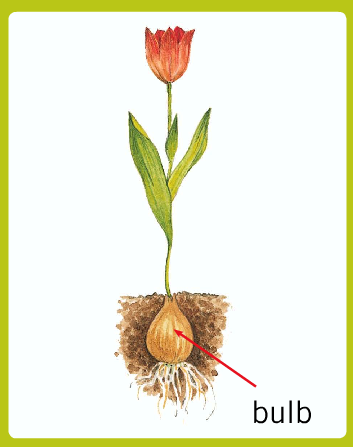
    • BULBS: they also grow underground. For example onions
    • STOLONS: These are stems which extend acroos the ground. Roots grop an a new plant begins. For example strawberries. 


LET'S PRACTISE ALL WHAT YOU HAVE LEARN DURING THIS TOPIC WITH THE FOLLOWING ACTIVITIES. 


martes, 9 de diciembre de 2014

PLANT NUTRITION (Science Year5, Unit 2)

Try to review what we have learnt about plants the last lesson. We are goint to use a THINKING ROUTINE: THINK-PAIR-SHARE. Think: three ideas about the last lesson, PAIR: talk about these three ideas to your partner, SHARE: we will talk with all the class so we can create a small mind map about it.


LET'S HAVE A LOOK TO THIS VIDEO TO START WITH THE TOPIC:
  • At the end of the video you have to create a picture in your notebook in which you represent the process of PHOTOSYNTHESIS.


RESPIRATION:
  • Plants breathe.
  • They take oxygen and release carbon dioxide. 
  • It takes place in leave continually, day and night. 

PLANT NUTRITION:
  • Plants are autotrophs: they make their own food.
  • They need sunlight, carbon dioxide, water and mineral from the soil.

WATER AND MINERALS
  • They are importann for plant nutrition.
  • In the soil minerals are dissolved in water.
  • Plants absorved water through the roots.
  • RAW SAP: The nutrients travel up from the stem to the leaves.


PHOTOSYNTHESIS
  • It enables plant to make food using sunligth, carbon dioxide, water and minerals.
  • It takes place in the lives.
  • In the leaves raw sap mix with carbon dioxide and becomes ELABORATED SAP.
  • ELABORATED SAP is the food for the plant.
  • Sunlight is very important for the photosynthesis so it only takes place during the day.
  • During this process the plants release oxygen.

LET'S PRACTICE ALL WHAT YOU HAVE LEARN PLAYING THIS GAME