Mostrando entradas con la etiqueta Middle Ages. Mostrar todas las entradas

viernes, 13 de junio de 2014

SPAIN AFTER 1492

We have walked along the medieval time in our country with the VISIGOTHS, AL ANDALUS and THE CHRISTIAN KINGDOMS. We are going to review a bit all of it with a new THINKING ROUTINE: THE HOT WORDS.  What is a HOT WORD? It is a word that can help you to remember lot of things about a topic. So let's think during a minute about three hot words about each one of the topics we have learnt during this unit. 

Now let's watch a video to introduce what happened in Spain after 1492: THE SPANISH EMPIRE. At the end of the video you should be able to answer these questions: 
  • Which was one of the conquerors?
  • Which continent was the biggest part of the Spanish Empire in?
  • Which metal was important during this period?


SPAIN AFTER 1492


Columbus reached America in 1492.

In this year also the Catholic Monarchs unified the kingdoms of Spain. 

Charles I and Philip II acquired new possesion during the 16th century.


In 18th Century the kings stablished ABSOLUTE MONARCHY. 

THE TERRITORIES OF THE SPANISH EMPIRE. 


Between 16th and 19th century Spain has possesions in every part of the world: Canary Islands, America, Philippes in Asia and several teritorritories in Norh Africa. The kings also inherited territores in central an southern Europe.
By the end of 19th century most of these possessions no longer belonged to Spain.

WRITERS AND ARTISTS
In the 16th and 17th  centuries was a great century for art and literature in Spain: THE GOLDEN AGE.

Literature: Miguel de Cervantes wrote El quijote. Famous poets like Quevedo and Góngora. Lope de Vega and Calderón de la Barca wrote many plays. 

Paintings: Diego Velazquez was one of the famous painters of this time. 

jueves, 12 de junio de 2014

THE CHRISTIAN KINGDOMS

We have been talking about: VISIGOTHS and about AL ANDALUS.  We are going to review how are you learning with a THINKING ROUTINE: THE TRAFFIC LIGHTS. Just to remind you:

  • GREEN: what you have already learnt.
  • ORANGE: what you are trying to improve or going deeper.
  • RED: what you haven't learn at all. 

Let's have a look about a famous Spanish TV serie, at the end of the video you will answer some questions:
  • Who were the kings when they got Granada?
  • Were there any kind of war or battle?


THE CHRISTIAN RECONQUEST

Around year 1000 Al Andalus weakened and broke up into TAIFA.


Christian Kingdoms expanded.

The Christian Reconques was completed in 1492, when the Caholic Monarchs conquered Granada. 


THE CHRISTIAN KINGDOMS
Around 1230 the Christian Territory was divided into:

  • The Kingdom of Navarre included Navarre and part of la Rioja.
  • The Crown of Aragon included the Kingdom of Aragon, Valencia and Majorca with the Catalonian Counties.
  • The Crown of Castile included the Kingdom of Castile and the Kingdom of Leon. Later will include Andalusia.
  • Portugal was an independent kingdom.

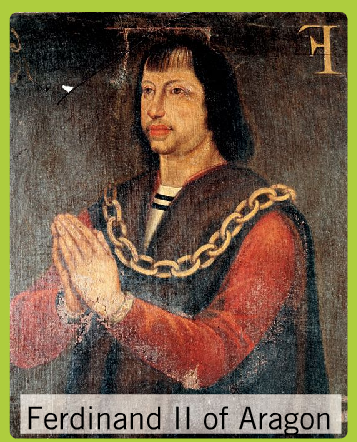
In 1479 Isabella I of Castile and Ferdinand II of Aragon, married and united the Crown of Aragon and Castile. They were known as Catholic Monarchs.

THE KINGDOM OF GRANADA.

It was the last Taifa Kingdom 
(Granada, Malaga and Almeria)

It was weakened by internal disputes. Finally it was conquered by the Catholic Monarchs. 


miércoles, 11 de junio de 2014

Al-Andalus.

Today we are going to work with a new THINKING ROUTINE. It is called THE MISTERY QUESTION. You have to think on what we learnt the last lesson: THE MIDDLE AGES. Once you have in mind you have to create a question that maybe one of your partners could not understand. The teacher will try to answer and explain better that points.

Once we have solved all the questions and everything is clear we are going to watch a video to learn a bit more about AL-ANDALUS. Pay attention because at the end of the video you have to answer the following question:
  • Where did the first Muslim enter through to start the conquest of Spain?


MUSLIMS AND CHRISTIANS. 

In 711A.D. Muslims from northern Africa invaded Visigothic Spain. 

Hispania was called Al-Andalus.

Muslims brought their customs, laws and religion. 

The highest authority was the CALIPH and the religion was ISLAM

They lived in cities. They were merchants and craftsmen.

Christians live in the country in the north of Península, the highest authority was the KING. They were farmers. 

AL ANDALUS
The peninsula was occupied by Muslims for almost eight hundred years.

They lived in walled cities on hills. 

They built palaces and Mosques.


They most important city was Córdoba the capital.

THE CHRISTIAN KINGDOMS.


Muslims occupied the south, but there were indepedent Christian Kingdoms in the pas in the north like: Kingdom of Asturias, later the kingdom of Leon. 

At the end of the period the KINGDOm OF CASTILE was formed. 

LET'S PLAY AND CONTINUE LEARNING. 

martes, 10 de junio de 2014

The middle Ages

Let's start a new topic of Science. As always we will start with a THINKING ROUTINE. The thinking routine is THINK - PAIR - SHARE. We are going to review what we have learnt about history so:

  • THINK: about what we have learn about prehistory, Iberians and Romans and try to represent it on your notebook on a timeline.
  • PAIR: check it with your partner and complete it in case you need. 
  • SHARE: We will try to complete one timeline with all your ideas. 

Let's have a look to this video and answer this questions:
  • What shape was the visigothic church?
  • Can you describe a bit how the floor of the church was?


THE INVASION OF GERMANIC TRIBES


In 409 A.D.  the Vandals invaded Spain.


The Visigoths established a kingdom on the Iberian Peninsula.


THE VISIGOTHS

The Visigoths crossed the Pyrenees went to the center of Hispania. They established Toledo as their capital.
Later they conquered the places occupied by the Germanic Tribes. 


They changed their language, religion and laws to unify their new kingdom. They adopted the Hispano-Roman culture and converted to Christianity. They based on Roman law.

They lived in villages. They used land for agriculture and livestock farming. They were expert metalworkers. 


The Visigothic kingdom ended after the Muslim invasion in 711 AD.

miércoles, 8 de mayo de 2013

Revisión of your videos about MIDDLE AGES

With this post you are going to evaluate your partner's videos and popplets following the rubric and answering to this questionaire.


When you finish reading the rubric and you have everything clear about your mind, you can start watching your partners video and answering the questions to evaluate it. IT IS VERY IMPORTANT TO HAVE CLEAR WHAT YOU HAVE TO LOOK FOR AND WHAT ARE THE CRITERIA FOR EVALUATION.


You will send your evaluation through this Google Form. DON'T FORGET TO CLICK ON SUBMIT AT THE END.


Popplets about MIDDLE AGES.

Utilizando las TICs para repasar, una vez terminada la unidad sobre la EDAD MEDIA, los Visigodos en la Península Ibérica, Al Andalus, los Reinos Cristianos, trabajamos como siempre, realizamos nuestro mapa conceptual con Popplet.


Después los alumnos graban su explicación con la aplicación Screencast-O-Matic. 


Publican su entrada en su Portfolio Personal creado dentro de los blogs personales de Kidblog.


Y nos lo envían para poder corregirlo a traves de la red social educativa de Edmodo.
Estos son los trabajos de los alumnos de esta unidad. 

jueves, 2 de mayo de 2013

The Christian Kingdoms in the Iberian Peninsula.

We will continue learning about how things happened in the Iberian Peninsula during the Middle Ages. Remember first were the Visigoths then the peninsula was invaded by the Muslims, and now we are going to learn how the Christians reconquested The Iberian Peninsula.

This video will show you how everything took place.


THE CHRISTIAN KINGDOMS.

  • The long period of expansion of the Christian kingdoms started only eleven years after the Muslins invasion. It is called RECONQUEST.
  • By around 1230, there were FOUR LARGE KINGDOMS:
    • KINGDOM OF PORTUGAL, it was independent from Leon.
    • KINGDOM OF NAVARRE, Navarra and La Rioja.
    • CROWN OF ARAGON: Catalonia Counties, Kingdom of Aragon, Valencia and Majorca.
    • CROWN OF CASTILE: Includes the Kind of of Castille and the Kindom of Leon. Later it included Al Anlandalus. 
  • In 1479, Isabella I of Castille married Ferdinand II of Aragon, and the Crown of Aragon and the Crown of Castile were united. 


MEDIEVAL SOCIETY:
There were three groups of people:

  • NOBLES: they were rich and they were the owners of the land.
  • CLERGY: They were monks, bishops and priests.
  • PEASANTS: It was the biggest group, they cultivated the land. 

CULTURAL HERITAGE.
  • In the 12th Century were founded the first universities. The first one was the University of Palencia.

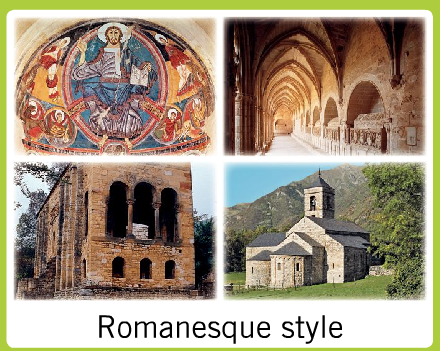
  • In the early Middle Ages, churches were built in Romanesque Style: thick walls and small windows. 

  • After the 13th Century, palaces and cathedrals were built in Gothic Style. They had pinted arches and large stained-glass windows. 


LET'S DO THE QUIZZ AND REVIEW ALL YOU HAVE LEARNT.

lunes, 29 de abril de 2013

Al- Andalus. The muslims in the Iberian Peninsula

In the last historical period we talked about the Visigoths. The Visigoths were in the Iberian Peninsula until the 711 A.D. when the King Roderic was defeted by the MUSLIMS. It was in this moment when this new historical period started.

LET'S HAVE A LOOK TO THIS VIDEO TO HAVE AN IDEA ABOUT HOW THE MUSLIM CONQUEST WAS. 


THE MUSLIM INVASION.


  • Muslims from northern Africa invaded Visigothic Spain in 711 A.D.
  • They ocuppied most of the Peninsula and the Balearic Islands
  • This territory was called Al Andalus, and its capital was Cordoba.
  • Al Andalus became a province of the Muslim Empire. It was governed by the caliph of Damascus in Asia.

THE EMIRATE OF CALIPHATE OF CORDOBA.


  • In 756 A.D. Abd ar-Rahman I established Al Andalus as an independent province or emirate.

  • In 929 A.D. Al Andalus became a caliphate under Abd ar-Rahman III. He was the caliph, the maximum political and religious authoroty in Al Andalus. 

  • The caliphate lasted until 1031 A.D. During this period, Al Andalus was divided into smaller kingdoms, called taifas.

THE END OF AL ANDALUS.
  • The taifas fought among themselves and this helped the Christian Kingdoms to gain territory. 
  • In 1212 A.D. The Christians defeated the Muslims at The Battle of Las Navas de Tolosa.
  • In 1492 A.D. the Catholic Monarchs conquered the only remaining Muslim Kingdom, the Kingdom of Granada. 

SOCIETY AND CULTURAL HERITAGE.
  • Al Andalus society was formed by Muslims, Christians and Jews.
  • It had great scienctists, suchs as doctors, mathematicians and geographers. The mathematicians created the systems of numbers which we used today
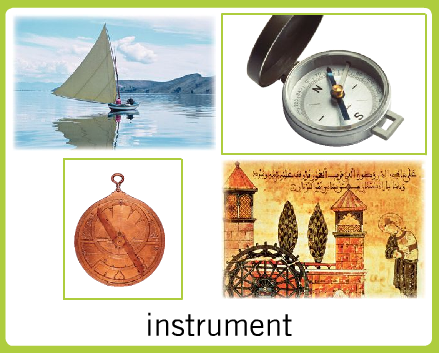
  • The Muslims made great contibutions to society:
    • CROPS: like rice.

    • INSTRUMENTS: like compass.

    • IRRIGATION SYSTEMS.

LET'S PLAY AND REVIEW WHAT YOU'VE LEARNT

viernes, 26 de abril de 2013

The Visigoths

Let's move onto the next period of History. Remember we have talked about Prehistory, Pre-Roman times, and the Roman Empire in the Iberian Peninsula. Now we will learn about the MIDDLE AGES, and today we will start when the Germanic Tribes conquered Hispania and defeat the Roman Empire.


This video will explain you what happened in the Iberian Peninsula during the MIDDLE AGES.


THE VISIGOTHS INVASION.
If you have a look and think about this map. With a partner try to explain the Visigoth invasion, where did they come from? What parts of the Iberian Peninsula did they conquer first? Who were in the Peninsula before them?

THE VISIGOTHS.


  • The Vandals, Alans and Suevi were tribes from Northern Europe. They invaded Hispania in 409 A.D.
  • To fight against them Romans needed the help of Visigoths, another Germanic Tribe.
  • They expelled Vandals and Alans and Visigoths established their own kingdom in The península. 

THE VISIGOTHIC KINGDOM.


  • The Peninsula was controlled by the Visigoths and the Suevi (They were in the north-west).
  • The Visigothic Kingdom was ruled by a King.

  • Leovigild was one of the most important kings. He made Toledo the capital of the Kindom and conquered the Suevi.
  • The Visigothic Kingdom lasted until 711 A.D. when Roderic was defeated by the Muslims.

VISIGOTHIC SOCIETY. 
  • Visigothic unified their new kingdom by changing their own language, religion and lasw.
  • They became Christians and based their laws on Roman laws. 

VISIGOTHIC HERITAGE.

  • They built small stone Churches.
  • They made jewellery with gold, silver and precious stones. 

LET'S PLAY WITH THIS CROSSWORD 
&
REVIEW WHAT YOU'VE LEARNT.