Ahora lee la noticia con calma y detenimiento. Trata de entender todo lo que en ella cuenta, y si bien no lo entiendes, trata de ampliar la información en la red o con aquellas personas que puedan ayudarte. Y después completa la rutina de pensamiento en el Padlet que se encuentra a continuación.
Una vez que has leído la noticia, trata de completar la rutina de pensamiento que te pedimos. Para ello apunta aquello que te parece positivo de la noticia, aquello que es negativo y lo que te resulta interesante de cuanto has leído.
Recoge todas las reflexiones que has realizado en el Padlet y te pedimos que completes dicha reflexión pensando ¿Conoces otros Premios NOBEL de la PAZ y los motivos por lo que se le otorgó dicho premio?
Along this topic we have learn about the living things and the cells. Today we want to learn a bit more about the organization of cells. If we focus our attention in the cells we can classify the organisms into MULTICELLULAR and UNICELLULAR.
Let's have a look to this video and at the end of the video in the group you have to create a definition about what a multicellular and an unicellurar is.
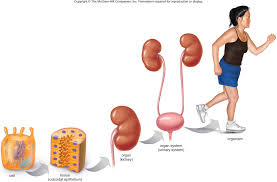
Living things that are composed of two or more cells are called multicellular organism. All the cells are arranged so that the organism can performed the vital functions.
LEVEL 1: It is the single cell.
LEVEL 2: Tissues. They are a set of one type of cells which performs the same function.
LEVEL 3: Organs. The grouping together of a set of tissues which performs the same function.
LEVEL 4: System. Some organs that perform the same function are grouped together in a same system.
All the systems perform the ORGANISMS
Let's practise a bit more about Organization of Living Things using this video and the following test.
Muscle cellsare elongated. These cells and the tissues can expand and contract. This allows muscle to move.
Epithelial cells: These flat cells line certein area of the body such all the skin. They insulated the body and protect it.
Nerves cells: They are star shaped with long extension or arms. These cells establish connections and then transmit information to all parts of the body
To sum up and internalise your knowledge along this lesson you are going to create a model explaining from the cells to the organism. Let's use plasticine to create the model and paper to label it. Take a picture of it to publish it.
What do you have to do? Create a model using plasticine and paper to reproduce this photo.
STEP 1: Decide with your mates what you are going to represent. Let's investigate how it is and how to represent.
STEP 2: Talk with your mates about the material you will need and how do you will organize to have it (plasticine, sticks, papers, and if it is posible a camera to take a photo)
STEP 3: Organize the group deciding who is going to do each things, who is going to create the cell, who the tissue, the organ,.....
STEP 4: Work on your part of the task, don't hesitate to ask for help to your mates in case it is necesary.
STEP 5: Let's prepare the final model and take a picture and send it to your teacher.
STEP 6: Each group will show the final product to the rest of the groups.
It will be esier for you to talk in front of your mates if you have a script to follow. The following sentences would be helpful for you.
Hello, we are........
We are going to present you the .......levels of organization of the human body.
The first level is the ......................
All the .............together form the 2nd level which is..................
The ............... together form the 3rd level which is the..............
The ................., ..........................., .......................... are the different organs for the .......................... system. Explain you system, you can use your own information or you can have a look to page 14 and 15 of your book.
The ...................... system with the ...................system, the ............system, the ... system, the ... system and the .............................system form the HUMAN BODY.
Este curso vamos a comenzar con un proyecto en el área de tutoría que han diseñado las profesoras Sandra Garrido y Sandra Ibañez y lleva por nombre el Proyecto Arco Iris. El proyecto pretende desarrollar vuestros talentos personales a través del trabajo con la Inteligencias Múltiples.
Todo esto supongo que os sonará muy raro y serán para vosotros palabras un tanto extrañas. Para facilitaros el inicio vamos a visualizar un vídeo y realizar una rutina de pensamiento HOT WORD. Con todas las palabras crearemos una nube de palabras que nos acompañe a lo largo de todo el año.
Pues parece que ahora lo vamos aclarando y resulta que no sólo tenemos una inteligencia sino que son ocho y que cada uno podemos destacar en una de ellas, en varias o en todas:
Inteligencia Lingüística.
Inteligencia Lógico - Matemática.
Inteligencia Espacial.
Inteligencia Musical.
Inteligencia Cinético- Corporal.
Inteligencia Intrapersonal
Inteligencia Interpesonal
Inteligencia Naturalista.
Dentro de este primer mes, en nuestro programa de Escuela de Talento, este mes vamos a trabajar la Inteligencia Lingüística - Verbal.
Para ello vamos a realizar una representación que grabaremos en vídeo. Es importante tener claro cómo nos vamos a organizar para llevar a cabo esta tarea:
Vamos a trabajar en parejas.
Vamos a emplear en esta tarea 3 sesiones por lo que será necesario organizarnos bien para llegar a tiempo.
El éxito de la tarea será ir siguiendo los pasos solicitados.
Tema de la representación: Situaciones en las que hacer el bien.
En la primera sesión vamos a realizar una lluvia de ideas y realizaremos un documento en el que queda registrado: los personajes, la introducción, el nudo de la historia y el desenlace. Todo ello descrito de forma general y redactado en un párrafo con títulos para cada parte, quizás el siguiente documento te sirva de ayuda.
En la segunda sesión realizaremos dos tareas importantes para la consecución de nuestra tarea final.
Realizaremos el guión de la escena que vamos a representar. Recordad que todos los miembros del grupo deberéis intervenir más o menos en la misma proporción. A la hora de redactar el guión pondréis el nombre de los personajes antes de cada una de sus partes. Entre paréntesis podréis colocar aquellas cosas de atrezzo que queréis reflejar. Utilizad el mismo documento que en la sesión anterior.
Ensayad la escena para la realizar la representación y grabación en la siguiente sesión.
En la tercera sesión cada grupo representará su escena delante del grupo clase. El profesor o algún compañero grabará dicha representación.
A lo largo de las diferentes sesiones el profesor irá evaluando cómo vas desarrollando y trabajando tu Inteligencia Lingüística mediante la siguiente rúbrica.