jueves, 6 de marzo de 2014

Volcanoes, Earthquakes and Weathering

We are going to finish with this unit 7. First we have learnt about  THE ATMOSPHERE. Second we have discovered THE HYDROSPHERE.  Third we have learnt about THE GEOSPHERE.
Finally we are going to learn about VOLCANOES, EARTHQUAKES and WEATHERING.

VOLCANOES

How many times do you see when a volcano erupts?


Volcanoes form in places where there is magma, red-hot liquid rock, just under the surface.
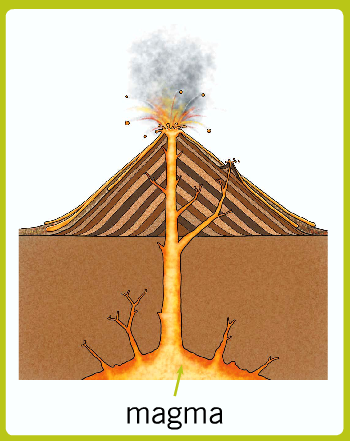

The parts of a VOLCANO


Where does the magma go?


What is a circular opening which the magma emerges through it called?

What does it emerge through thre crater?


Layers of lava and ash cool and solidify around the crater, and form a VOLCANIC CONE.


If you want  to get to know more about VOLCANOES, you could look at this webpage:

EARTHQUAKES

Could you tell us what the earthquakes are caused by?


EARTHQUAKES are caused by the movements of the Earth's crust.

WEATHERING


What is the action of wind and water called?


When we will have finished to watch the video, we are going to test yourself:


EROSION is the removal of soil and rocks by wind and water.


TRANSPORT is the movement of eroded material.
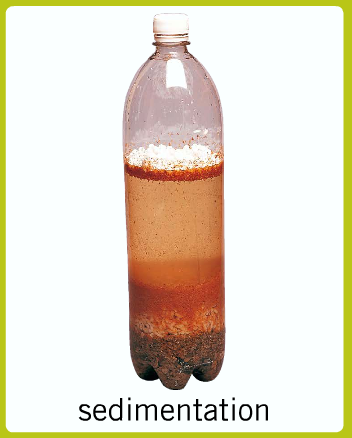

SEDIMENTATION is the accumulation of eroded material from other places.

To review everything we are going to make these activities:

miércoles, 5 de marzo de 2014

The Geosphere

We have been learning about THE ATMOSPHERE and THE HYDROSPHERE. Even though today it is time to learn about THE GEOSPHERE.


What is the geosphere?

The geosphere is made up of three layers.

GEOSPHERE LAYERS

Could you join the picture with the correct answer to these questions?

 Which is the outer layer of the geosphere?
Which is the inner layer?
Which layer is between the crust and the core?


ROCKS and MINERALS


Are rocks natural materials?
Are minerals natural materials?
What are rocks made of?

To get to know more than rocks, we are going to watch this webpage:


TYPES OF ROCKS

Rocks can be classified into three types depending on how they are formed:


To remember everything about the Geosphere, we are going to do these activities:

Comparative Adjectives

In one of our past topics we were talking about ADJECTIVES and how to use them. This time we will look about HOW TO COMPARE THINGS using adjectives. We are going to study COMPARATIVES.

  • The regular adjectives we add -ER at the end: FAST-FASTER.
  • If the adjectives finishes with -Y we will change it into an -I and -ER:  PRETTY  -   PRETTIER.
  • If the adjective has the structure Consonant -Vowel -Consonant, we have to double the last consonant: BIG  -  BIGGER.
  • If the adjective has more than two syllables we add MORE: BEAUTIFUL - MORE BEAUTIFUL.


Also we have irregular adjectives we should learn it by heart: GOOD - BETTER  /  BAD - WORSE.

In the following website you will find more info about their use and how to create them.


This video could help you to understand better the grammar about this topic:


With the following activities you can practice how to write and create sentences with Comparative Adjectives: