Mostrando entradas con la etiqueta 5º EP. Mostrar todas las entradas

miércoles, 8 de mayo de 2019

El día de Europa 2019

El Día de Europa (9 de mayo) celebra la paz y la unidad del continente europeo. La fecha es el aniversario de la histórica "declaración de Schuman". En un discurso pronunciado en París en 1950, el ministro francés de Asuntos Exteriores, Robert Schuman, en el que expuso su idea de una nueva forma de cooperación política en Europa que hiciera impensable una nueva guerra entre las naciones europeas. La propuesta de Schuman se considera el comienzo de lo que es hoy la Unión Europea y desde entonces se suceden actos de celebración cada 9 de mayo.


Os propongo visualizar un vídeo que nos pueda ayudar a interiorizar un poco más qué es la Unión Europea y lo que supone. 


La rutina que vamos a realizar es el Titular, intenta resumir en una sola frase lo que supone este día, o lo que se ve en este vídeo. Y puedes escribirlo junto con tu nombre o con el nombre de tu grupo en el siguiente muro digital. Explicación de la rutina de pensamiento El Titular. 


lunes, 25 de mayo de 2015

Una semana de intercambio en el colegio San Gregorio (18 al 22 de Mayo 2015). Proyecto e-Twinning

Un año más el barco de nuestro proyecto e-Twinning hace escala en el Colegio San Gregorio en Aguilar de Campoo. Este año bajo el nombre: "A touristic guide about my town"A lo largo de esta semana hemos tenido con nosotros a 12 alumnos y 3 profesores del Holy Trinity School (Guildford, England). Durante la semana han compartido tiempo en los diferentes cursos del colegio, con las familias, en diferentes lugares de nuestra villa y de la provincia. También han realizado un proyecto junto con los alumnos de 5º de Primaria del colegio acerca de Castilla y León.  Ha sido una semana llena de emociones, grandes momentos, encuentros compartidos, `pero sobre todo a sido una gran aventura de aprendizaje para todos. 


A year again the boat of our e-Twinning has stopped in our school, Colegio San Gregorio in Aguilar de Campoo. This year the project is "A touristic guide about my town". Along this last week (18th-22nd  May 2015) we had with us 12 students and 3 teachers form Holy Trinity School (Guildford, England). Durante la semana they shared their time with the different levels of the school, with the families, in different places of our town and our province. They also made a project with the Year 5 students of the school about Castilla y León. It was a weel full of emotions and feelings, great moments, above everything it was a big learning adventure for everybody. 


A través este post vamos a tratar de recoger todo lo sucedido a lo largo de esta semana:

Through this post we will try to show everything which took place along this week:

  • Con los alumnos de 2º de EP / Literacy lesson with Year 2 Students

  • Participación del Holy Trinity School en la asamblea / Participation of Holy Trinity School in the assembly. 
  • Resumen gráfico de la semana de intercambio / A photo summary about the exchange week: 


  • El intercambio en la prensa, redes sociales y otras webs / The exchange at the press, social networks and other websites. 


Pincha en la imagen para leer la noticia
Click on the picture to read the new


Pincha en la imagen para leer más
Click on the picture to read more


  • Despedida y agradecimiento de los profesores del Holy Trinity School / Farewell and thanks form Holy Trinity School. 

Thank you so much for this great experience. It gives the opportunity for our children to see each other, develop a friendship and work together face to face.  It allows them to experience another culture, try new food, meet new friends and go to school in another country - it is a unique experience and one the students will remember forever. 
It would not be possible without the support of Colegio San Gregorio or without the hospitality of the families and teachers here.  We look forward to having students from San Gregorio  visit us again soon and we will come back next year so a new group of students can learn from this fantastic opportunity.  

Richard, Helen and Mary

Muchas gracias por esta gran experiencia. Ha dado la oportunidad a nuestros alumnos la oportunidad de ver a sus compañeros de nuevo, desarrollar su amistad y trabajar juntos cara a cara. Todo ello permite experimentar en otra cultura, probar nueva comida, conocer nuevos amigos e ir al colegio en otro país. Es una experiencia única que nuestros alumnos recordarán siempre.
Todo esto no  sería posible sin el apoyo del Colegio San Gregorio y sin la hospiltalidad de las familias y los profesores. Esperamos que pronto podamos tener en nuestro colegio la visita de alumnos del Colegio San Gregorio y nosotros volveremos el curso que viene con un nuevo grupo de estudiantes y poder aprender de esta fantástica oportunidad.
Richard, Helen y Mary

GRACIAS A TODOS Y CADA UNO DE LOS QUE HACÉIS POSIBLE QUE ESTE TIPO DE PROYECTOS SE CONVIERTAN EN VERDADERAS 
AVENTURAS DE APRENDIZAJE

martes, 31 de marzo de 2015

Nuestra Aventura de Aprendizaje: El intercambio en Holy Trinity Pewley Down en Guildford (Inglaterra)

Durante la semana del 2 al 6 de marzo de 2015 once alumnos del Colegio San Gregorio  disfrutaron de una gran aventura de aprendizaje: Un intercambio y estancia en el colegio Holy Trinity Pewley Down en Guildford, Inglaterra.

Esta aventura de aprendizaje forma parte de un proyecto anual de e-Twinning que estamos llevando a cabo con los alumnos de 5º bajo el título: "A touristic guide about my town"

Previo a nuestro viaje los once alumnos junto con los dos profesores que íbamos a viajar a Guildford preparamos nuestro viaje. Entre todos vimos la necesidad de crear un instrumento para poder recoger las evidencias de nuestra Aventura de Aprendizaje. Es así como nació EL PORTAFOLIO PARA NUESTRO INTERCAMBIO. En el mismo recogíamos:

  • Nuestros datos y los de nuestra familia de acogida.
  • Los preparativos del viaje: diccionario, horarios, planificaciones, rutinas de pensamiento sobre lo que esperamos.
  • Diario de viaje: donde a través de preguntas se van resumiendo los días del intercambios. 
  • Reflexión final: Una rutina de pensamiento para recoger todo lo aprendido, vivido, etc....

En el siguiente Storify hemos recogido la presencia en las redes sociales de nuestro intercambio:


También nuestra experiencia se recogió en diferentes noticias y publicaciones en la web del Holy Trinity Pewley Down School:

El siguiente vídeo recoge nuestro agradecimiento por la semana que vivimos allí así como por la larga relación que tienen ambos colegios. 


Como bien hemos dicho desde el principio todo esto ha sido y está siendo una Aventura de Aprendizaje para todos nuestros alumnos. Por lo tanto ha pasado a formar parte su portafolio de Aprendizaje, en los siguientes links podéis ver todo lo que han aprendido, vivido, sentido, ...
Cómo conclusión podríamos decir que realmente ha sido una AVENTURA DE APRENDIZAJE dentro de nuestro proyecto e-Twinning. Para todos nosotros alumnos y profesores ha supuesto incorporar nuevos conocimientos, experiencias, relaciones, idiomas, situaciones a nuestra realidad. Esperemos poder continuar con este tipo de Aventuras durante mucho tiempo. Desde aquí agradecemos a todos los profesores y personas del colegio que hacen realidad estos proyectos. 

miércoles, 4 de junio de 2014

Developing Communicative Skills: ADVERBS AND SUPERLATIVES ADJECTIVES (Year 5)

With the following presentation we will practice SUPERLATIVE ARTICLES AND ADVERBS in our English lessons. They are some games for practicing questions and answers, we pretend to develop our students fluency and vocabulary. 
They are not needed to use in the same lesson, you can practice one or a part of one of them. 

WE HOPE YOU ENJOY THEM AND LEARN.

lunes, 12 de mayo de 2014

#BRINGBACKOURGIRLS and REAL MEN DON'T BUY GIRLS.

Con motivo del secuestro masivo en Nigeria. El alumnado de 6º de Primaria del Colegio San Gregorio en Aguilar de Campoo hemos querido realizar una rutina de pensamiento para analizar la siguiente noticia:


Por ello hemos visualizado el corto que aparece en la noticia y hemos leído la misma.
Más tarde hemos realizado una rutina de pensamiento durante 4 minutos para analizar la noticia.

I   SEE
I THINK
I WONDER


Los alumnos podrán escribir todo lo que quieran de la rutina de pensamiento, pero en especial I WONDER.

¿Te animas?


jueves, 8 de mayo de 2014

SERVICE SECTOR IN SPAIN.

During the last two lesson we talked about THE ECONOMY and about the PRIMARY AND SECONDARY SECTOR IN SPAIN. Today we are going to look and go indeep into the SERVICE SECTOR OR TERTIARY SECTOR IN SPAIN. 

We want you to have a look to this video. At the end of the video we want you to answer some questions about it. 

  • Can you tell three good things about Spain which are good for Tourism?
  • What things does Spain improve to have more tourists?


THE SERVICE SECTOR.

We can classify all the activities of this sector depending on the final aim.

  • PRIVATE SECTOR: banks, insurance companies, entertaiment industry, restaurant or shops. They want ot make money.

  • PUBLIC SECTOR: hospital or schools want to provide a service frequently this service is offered by goverment.

TRANSPORT
  • All Spain is conectted by road, and lots of motor ways.

  • Major cities and towns are also connected by railway. 

  • Suburban trains connnect big cities with surrounded areas.

  • Big cities (Madrid, Barcelona, Valencia and Bilbao) have underground.

  • There are airports in many cities.

TOURISM.

  • Every year million of foreing tourist come to Spain.
  • Tourism is one of the most important service activities in Spain.
  • It provide work for many people and makes a lot of money.
LET'S PRACTICE WITH THIS CROSSWORD.


Once we have finished with all the topic it is time to create your mind maps. We will start creating them in groups and using one of our THINKING ROUTINES: GENERATE - SORT - CONNECT - ELABORATE. 


Primary and secondary sectors in Spain

During the last lesson we had a quick view about ECONOMY, talking about what all the sectors are and they main thing they work on. Today we are going to focus our attention in the Primary and Secondary Sector in our country Spain. 

Let's watch this video about a man from Palencia. At the end of the video we want you to answer this video:

  • What are the best and the worst things for him as a crop farmer?


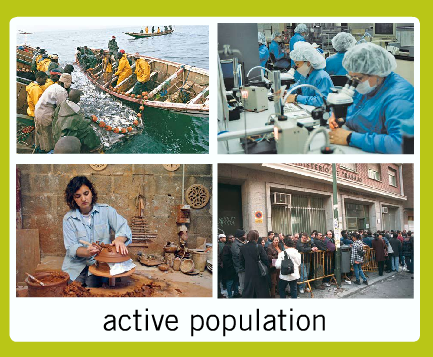
THE ACTIVE POPULATION. 


Nowadays the active population in Spain is aroun 23 million of people. And because of the crisis 16,5 million are employed and around 6 million are unemployed people. 

The active population is divided in:

  • 4.4 % work in the primary sector.
  • 20.6 % work in the secondary sector.
  • 75 % work in the service sector


THE PRIMARY SECTOR

The main sector activities are Agriculture, livestock farming and fishing.

Agriculture: 
  • On the plains.
  • Wheat, barley, olives, grapes, potatoes, vegetables, fruit.

Livestock farming:
  • Sheeps and poultry on the plains.
  • Cattle on the mountain areas.

Fishing:
  • On the coast areas.

Other important activities mining and forestry.


SECONDARY SECTOR.
Main industries are near the big city. Important industries are: 
Metal industry

Chemical industry

Food industry

Telecommunications industry

Textile industry

Car industry.

The construction was important in the past but nowadays has decreased a lot. 


miércoles, 7 de mayo de 2014

THE ECONOMY

Let's start this new topic with a new THINKING ROUTINE. The name of it is  QUICK WRITE / QUICK VIEW. In the following graphic organizer you have to do to things a picture about what come to your mind if you think about the new topic: ECONOMY and in the other part you will write short sentences and a few ideas about the same thing. You will have four minutes to finish it. Then we will share ideas with the whole class.


Let's have a look to the next video as an introduction of the topic. Maybe you will need to review what is RAW MATERIAL. After watching the video I want you to answer these questions. 

  • What's the process for raw material from Primary to Tertiary Sector?
  • Could you tell me one operation of each sector?


WORK
It refers to the many productive activities which people do, usually for money.


We can have:

  • Active population: includes all the people who can work. The ones who are working and the ones who are unemployed.

  • Inactive population: The people who can't work: Children, retired people or disabled people.

PRIMARY SECTOR.
Raw material is obtained in the Primary Sector.


SECONDARY SECTOR: 
Natural resources are transformed into products.

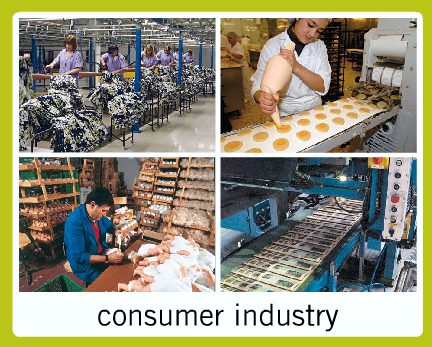
  • Manufacturing industries: they transform raw material into products.

  • Consumer industries: manufacture products such frozen vegetables. 

SERVICE SECTOR: 
All the bussinesses that provide servicies like schools or tourism. 

  • Private services: They are controlled privately.
  • Public servicies: they are controlled by the state or the local goverment. 
LET'S PLAY AND PRACTICE WHAT YOU HAVE LEARNT

viernes, 2 de mayo de 2014

Evaluation of the Mind Map about ENVIROMENT.

With this post you are going to evaluate your partner's videos and popplets following the rubric and answering to this questionaire.


When you finish reading the rubric and you have everything clear in your mind, you can start watching your partners video and answering the questions to evaluate it. IT IS VERY IMPORTANT TO HAVE CLEAR WHAT YOU HAVE TO LOOK FOR AND WHAT ARE THE CRITERIA FOR EVALUATION.


You will send your evaluation through this Google Form. DON'T FORGET TO CLICK ON SUBMIT AT THE END.


To write the comments, you have to follow this pattern:
  • REDACCIÓN EN KIDBLOG: Tienes … porque…
  • ORGANIZACIÓN EN EL MIND MAP: Tienes … porque…
  • ESTRUCTURA DEL TEXTO: Tienes … porque…
  • ORTOGRAFÍA: Tienes … porque…
  • TÉCNICA GRAMATICAL Y TIEMPOS VERBALES: Tienes … porque…
  • VOZ Y RITMO: Tienes … porque…


jueves, 24 de abril de 2014

The environment: VEGETATION AND FAUNA

After having learnt about RIVERS and CLIMATE. Let's move onto last important part of the Environment: VEGETATION AND FAUNA

Before going indeep with this topic maybe it would be great to have a look to a video, but please pay attention to it because at the end you have to answer a question:
  • Can you name any animals or plants from the video?


Each climate has its own flora and fauna.
FLORA is all the plants life or vegetation in an area.


FAUNA is all the animal life in an area.


NATURAL PRESERVES 


PLANT HABITATS can be affected by pollution, the growth of citiesor the explotation of natural resources.
Animals and plant species are disapearing or they are in danger of extinction.


NATIONAL PARKS are areas that govermente created to preserve and protect the enviroment like:

  • TEIDE in Spain.
  • SNOWDONIA in the United Kingdom.
  • VANOISE in France.
  • HARZ in Germany.


After having a look to all about the environment: RIVERS, CLIMATE and VEGETATION AND FAUNA. We will finish  with the thinking routine we had started this unit: THINKING ROUTINE: 3-2-1 BRIDGE
Now you need to complete again the chart but with the new ideas you have. 

So in your notebook near the previous one let's draw and complete the following chart.


TIPS: Maybe to write an analogy or a metaphor will be very difficult for you in a foreing language so we invite you to write it in your own language, in this case Spanish. Here you have some examples that could help you to do it. ANALOGIES: "El perro es a ladrar como el gato a maullar". "Piloto es a avión como maquinista es a tren". METAPHORES: "El trabajo es pan comido" "Tus ojos brillan como diamantes".

DISCOVER AND REFLEX ABOUT THE BRIGDE: when we are talking about brigde is how your ideas have changed, what new concepts you have learnt, how you have learnt all these new things. 

viernes, 11 de abril de 2014

The environment: CLIMATE.

After the first part of this topic: RIVERS. Let's move onto another important part of the Environment: THE CLIMATE

Before going indeep with this topic maybe it would be great to have a look to a video, but please pay attention to it because at the end you have to answer this two questions:

  • What two factors can define a climate?
  • How many climate zones are there at the Earth?


CLIMATE

WEATHER can change in a few minutes.

CLIMATE is a region's characteristic temperature, wind or precipitation over a long time

THE EARTH'S CLIMATE.
The distance for the equator determinate how much heat it takes.
  • TROPICAL ZONE. It is very hot every year. 

  • TEMPERATE ZONE: 
    • There are warm summers.
    • There are  cold  winteres. 
    • Some parts are rainy and at another place it is dry.
  • POLAR ZONE:
    • It is very cold.
    • Around the North and South Pole. 

CLIMATE IN SPAIN
  • ATLANTIC CLIMATE:
    • This is the mild climate.
    • It is on Cantabrian Coast and in Galicia.
    • Rainfall is abundant all year round.
  • MEDITERRANEAN CLIMATE:
    • It is the climate near Mediterranean Sea.
    • Summers are hot.
    • Winters are mild.
    • Rainfall is light.

  • SUBTROPICAL CLIMATE:
    • This is the climate of Canary Islands.
    • It is hot all year round.
    • Rainfall is limited to some months of the year.

  • CONTINENTAL CLIMATE:
    • This is the climate of central Spain.
    • Summers are hot.
    • Winters are cold.
    • Rainfall is irregular. 


LET'S DO YOUR BEST IN THE QUIZZ!!