viernes, 12 de diciembre de 2014

PLANT REPRODUCTION (Science Year 5, Unit 2)

Last day we were talking about PLANT NUTRITION. We are going to review today using one of our THINKING ROUTINES: QUICK WRITE / QUICK DRAW.  Remember to draw and write as faster as you can with the ideas you had about last day lesson.

Today we are going to learn a bit more about how do plants reproduce. This STOPMOTION video will help you to understand.


  • At the end of the video you have to  answer these following questions. 
    • What is it needed for POLLINATION?
    • Do you think that just the bees can help with transportation?


SEXUAL REPRODUCTION
  • Flowers are the reproductive organs of the plant.
    • The stamen are the male. They produce polen.
    • The ovary is the female part. It produces ovules which  becomes seeds.


POLLINATION
  • Tiny pollen grains form on the stamens.
  • POLLINATION is teh movement of pollen from stamens to ovary. 
  • It used to take place in the same plant.
  • Wind and insects also carry plant to other plants. 


SEEDS AND FRUITS

  • After pollination the flower changes.
  • Petals fall and ovary grows. It becomes a fruit with seeds.
  • The fruit is ripe, it falls to the ground and the seeds fall out. 
  • The seeds germinate: they open, and small roots and tiny leaves grow.

ASEXUAL REPRODUCTION
  • Some plants reproduce without flowers or seeds:
    • TUBERS: they are underground stems. It develops roots and a stem rise above the ground.  For example he potato.
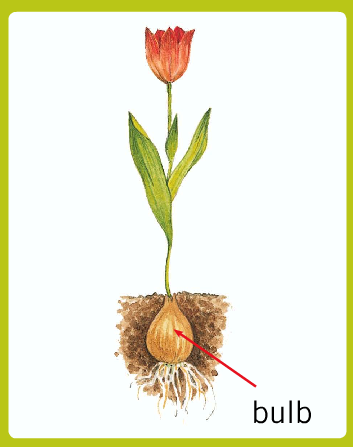
    • BULBS: they also grow underground. For example onions
    • STOLONS: These are stems which extend acroos the ground. Roots grop an a new plant begins. For example strawberries. 


LET'S PRACTISE ALL WHAT YOU HAVE LEARN DURING THIS TOPIC WITH THE FOLLOWING ACTIVITIES. 


martes, 9 de diciembre de 2014

PLANT NUTRITION (Science Year5, Unit 2)

Try to review what we have learnt about plants the last lesson. We are goint to use a THINKING ROUTINE: THINK-PAIR-SHARE. Think: three ideas about the last lesson, PAIR: talk about these three ideas to your partner, SHARE: we will talk with all the class so we can create a small mind map about it.


LET'S HAVE A LOOK TO THIS VIDEO TO START WITH THE TOPIC:
  • At the end of the video you have to create a picture in your notebook in which you represent the process of PHOTOSYNTHESIS.


RESPIRATION:
  • Plants breathe.
  • They take oxygen and release carbon dioxide. 
  • It takes place in leave continually, day and night. 

PLANT NUTRITION:
  • Plants are autotrophs: they make their own food.
  • They need sunlight, carbon dioxide, water and mineral from the soil.

WATER AND MINERALS
  • They are importann for plant nutrition.
  • In the soil minerals are dissolved in water.
  • Plants absorved water through the roots.
  • RAW SAP: The nutrients travel up from the stem to the leaves.


PHOTOSYNTHESIS
  • It enables plant to make food using sunligth, carbon dioxide, water and minerals.
  • It takes place in the lives.
  • In the leaves raw sap mix with carbon dioxide and becomes ELABORATED SAP.
  • ELABORATED SAP is the food for the plant.
  • Sunlight is very important for the photosynthesis so it only takes place during the day.
  • During this process the plants release oxygen.

LET'S PRACTICE ALL WHAT YOU HAVE LEARN PLAYING THIS GAME


PLANTS (Unit 2, Year 5)

Today we will start with a new topic during our Science Lessons. During a couple of weeks we will talk about PLANTS. First of all it would be good to start with a THINKING ROUTINE: THE TRAFFIC LIGHTS, we will use this to check what you remember or know about plants.


We can watch a video to introduce the topic. Please during the video we will deal with a new THINKING ROUTINE: HOT WORDS, write down in your notebook important words (just words) about the video. 


PLANT GROUPS

Plants have roots, stem and leaves.
  • ROOTS: they are in the soil. They absorbed from the soil through the roots. 
  • STEM: it supports the leaves. It transports water and nutrients to the leaves.
  • LEAVES: They are used to breathe and make plant's food. 


FLOWERING PLANTS

It is the biggest group of plants. 
  • GYMNOSPERMS: 
    • Small flowers, but no fruit.
    • Seed are together in a small cone.
    • Most of them are tree: Pine trees.
  • ANGIOSPERMS:
    • They have flowers
    • They have fruit.
    • Chessnut trees.


NON-FLOWERING PLANTS

It is the smallest group of plants. They need shade and moisture.
  • MOSSES: 
    • Small plants.
    • They live on rocks, trees and ground.
  • FERNS:
    • They are larger mosses.
    • They have thick, underground stems and big leaves.


LET'S PRACTISE WITH THIS CROSSWORD

What do you know about plants?